Health & Safety Policy – House Clearance Erith
 This Health and Safety Policy outlines the approach taken by our house clearance teams to protect staff, clients and the public when providing house clearance and rubbish removal services across our rubbish company service area. The purpose of this policy is to ensure safe working practices during removals, waste transfer, and site clearance activities while minimising risk and complying with industry standards. It applies to all employees, contractors and temporary workers engaged in house clearance and waste removal operations.
Our policy emphasises the importance of risk assessment, training and safe systems of work. Managers are required to carry out documented risk assessments before any clearance, and to communicate hazards clearly to teams. The emphasis is on proactive prevention: identifying slipping, tripping and manual handling hazards, securing vehicles, and ensuring appropriate disposal of rubbish and hazardous items. The approach is practical and adaptable across a broad rubbish collection service area.
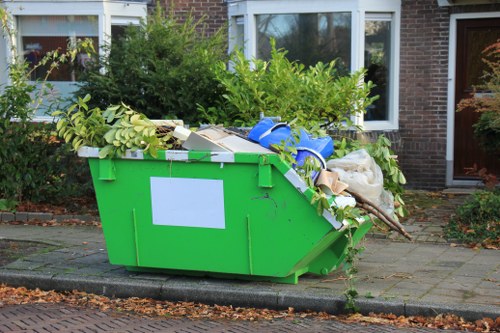 Scope: This policy covers domestic and commercial house clearance, estate clearances, loft and garage clear-outs, and ad-hoc rubbish collection jobs undertaken by our clearance crews. It includes the handling of bulky waste, small-scale hazardous materials encountered during clearances, and vehicle-based waste transport. The policy does not replace specific statutory duties but complements them by detailing operational standards for waste removal and rubbish collection tasks.
Responsibilities: All personnel have a part to play in maintaining safety. Key responsibilities include:
- Management: Provide resources, maintain vehicle and PPE standards, and ensure training is current.
- Supervisors: Conduct site-specific briefings, enforce safe systems, and record incidents.
- Operatives: Follow procedures, wear required protective equipment, and report hazards immediately.
 Risk assessment and control: Before work begins, teams must perform a visual and documented assessment identifying hazards such as unstable furniture, sharps, asbestos suspect materials, contaminated waste, aggressive animals or unsafe access. Controls include segregation of waste types, use of mechanical aids for lifting, provision of appropriate PPE and implementing exclusion zones for members of the public. Where hazardous materials are suspected, work must stop until a competent decision on disposal is made. These measures reduce exposure and keep operations within safe, acceptable limits.
Personal Protective Equipment (PPE) and tools: Operatives must use appropriate PPE for clearance tasks. Typical items include gloves resistant to puncture and chemicals, high-visibility clothing, safety boots, eye protection, and dust masks or respirators where airborne dust or mould is present. Tools and lifting aids should be regularly inspected; defective equipment must be removed from use. Correct PPE selection is essential for safe rubbish removal and house clearance work.
Manual handling and vehicle safety: Manual handling procedures must be applied to prevent musculoskeletal injuries during lifting, carrying and loading. Teams should use team lifts, trolleys and lifting straps when appropriate. Vehicle loading should maintain safe weight distribution and secure items to prevent movement in transit. Drivers must be trained in load safety and defensive driving, and vehicles should undergo routine maintenance checks to ensure roadworthiness across the wider rubbish company region.
Hazardous waste and prohibited items: While most clearances involve general waste, crews may encounter items that require special handling, such as batteries, solvents, certain pesticides, electrical appliances, asbestos-containing materials or medical waste. These items must be segregated, labelled and handled in accordance with recognised waste transfer and disposal procedures. If in doubt, operatives will seek advice rather than proceed, documenting decisions and following onward disposal pathways.
 Training and competence: A programme of induction and refresher training ensures staff are competent in manual handling, vehicle safety, waste segregation and emergency procedures. Training records are maintained and reviewed. New operatives receive supervised practical training in the field, and supervisors receive additional instruction on risk assessment and incident management. Competence is monitored through observation and periodic assessments.
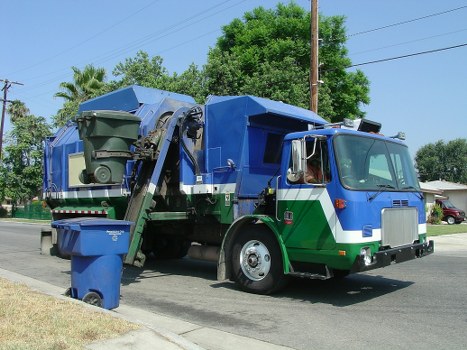 Incident reporting and investigation: All incidents, near-misses and hazards must be reported promptly and recorded. Investigations seek to identify root causes and to implement preventive actions. Lessons learned are shared across teams to improve safety practices in future clearances. Where required, external authorities will be notified in line with statutory obligations, but this policy focuses on internal prevention and continuous improvement within the service area.